Loading
Success story
Child
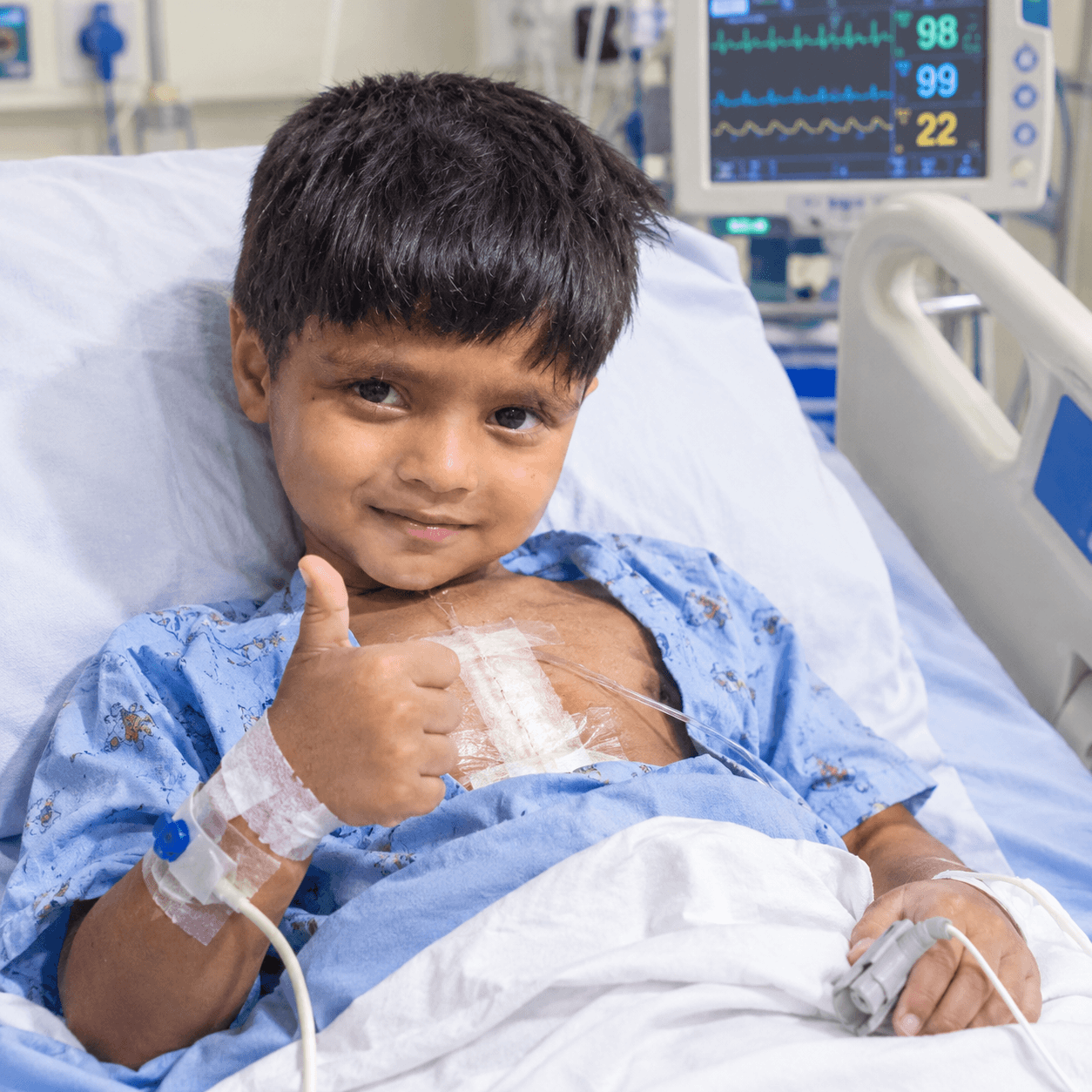
Today Abu Bakar is doing well.
Where it began
Abu Bakar was born with a ventricular septal defect, or VSD: a hole in the wall between the two pumping chambers of the heart. It sat in the perimembranous part, the upper section of the wall close to the heart's valves, and it was non-restrictive, which means the hole was so large that it did nothing to hold the blood back. With every heartbeat, blood from the strong left side poured through the hole into the right side and on into the lungs, flooding them and making the heart work far harder than it should.
The care
Babies with a large VSD breathe fast, sweat and tire while feeding, gain weight slowly and get chest infections again and again. Small holes often close by themselves, but a hole this large does not. Without surgery it leads to heart failure and, within the first years of life, lasting damage to the blood vessels of the lungs that can make the heart impossible to repair. In open heart surgery, made possible by the people who gave, Abu Bakar's surgeons closed the hole with a patch, so blood now flows only the way it should.
Getting stronger
With the hole closed, the lungs are no longer flooded and the heart can settle into its normal work.
Where Abu Bakar is today
Today Abu Bakar is doing well. Most children whose large VSD is closed in time go on to live full, active lives, with only routine check ups along the way.